Admin
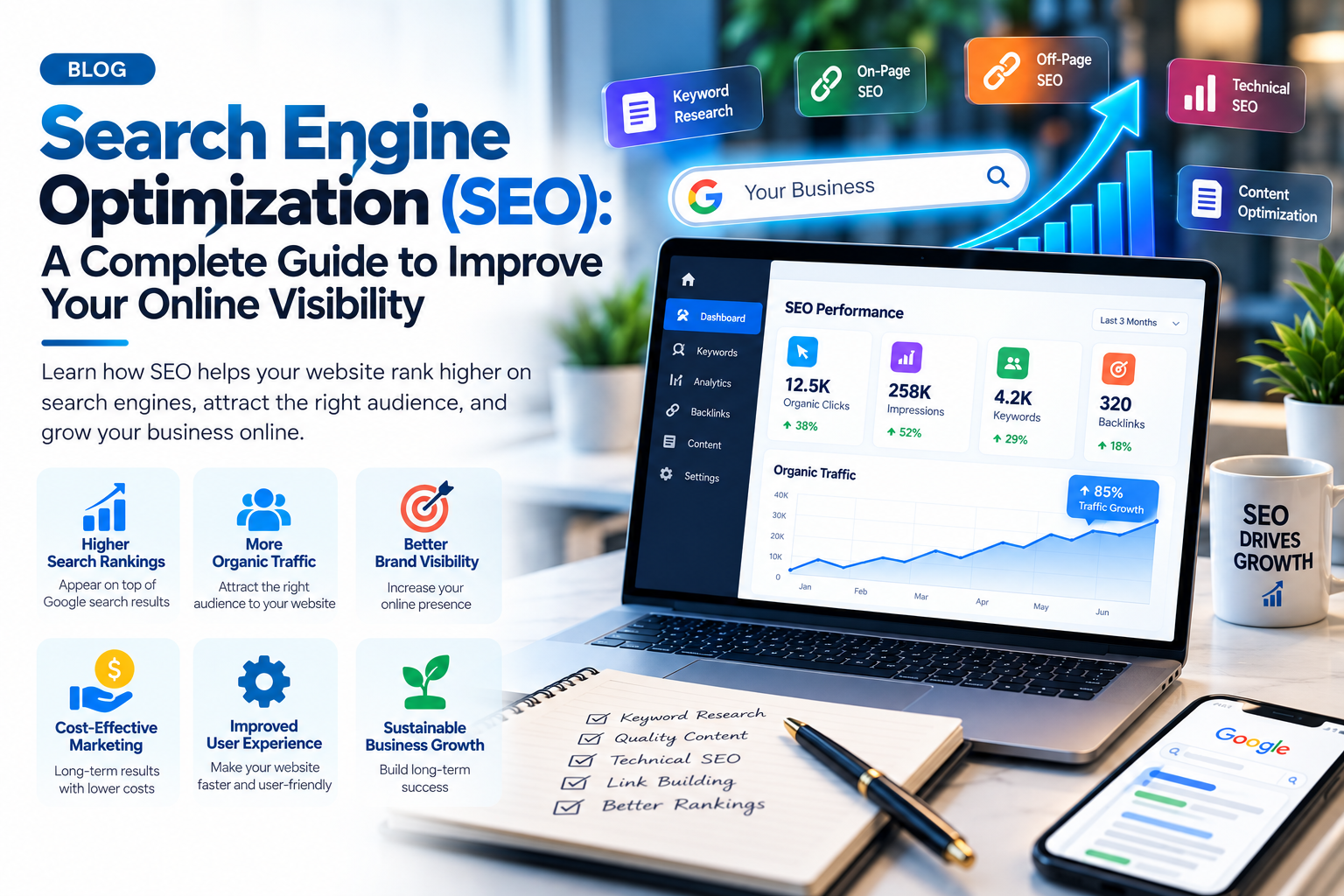
Search Engine Optimization (SEO): A Complete Guide to Improve Your Online Visibility
Meta Title: Search Engine Optimization (SEO) – Complete Guide to Growing Your Website
Meta Description: Discover how Search Engine Optimization (SEO) improves Google rankings, increases organic traffic, builds brand visibility, and generates quality leads for your business.
Introduction
In today’s competitive digital world, having a website is not enough. Your potential customers must also be able to find it when searching for products or services online.
This is where Search Engine Optimization (SEO) becomes important.
SEO helps businesses improve their website visibility on search engines like Google and attract visitors who are actively searching for relevant information, products, or services.
Whether you run a small business, an online store, or a professional service company, implementing the right SEO strategy can help you build a strong online presence and achieve long-term business growth.
What Is Search Engine Optimization (SEO)?
Search Engine Optimization (SEO) is the process of improving a website to increase its visibility in organic search engine results.
It involves optimizing website content, keywords, technical performance, website structure, and backlinks to help search engines understand and rank your pages.
The primary goal of SEO is to attract relevant visitors to your website without paying for every click.
Why Is SEO Important for Your Business?
1. Higher Search Engine Rankings
SEO helps your website become more visible when people search for relevant products and services on Google.
2. More Organic Website Traffic
By targeting relevant keywords, your website can attract visitors who are genuinely interested in your business.
3. Better Brand Visibility
Appearing in relevant search results helps people discover your brand and become familiar with your services.
4. Cost-Effective Marketing
Unlike paid advertising, organic SEO traffic does not require payment for every website click, although SEO requires ongoing investment and effort.
5. Improved User Experience
SEO encourages better website speed, mobile responsiveness, navigation, and content organization.
6. Long-Term Business Growth
Consistent SEO improvements can help businesses build sustainable organic traffic and generate relevant enquiries over time.
Different Types of SEO
1. On-Page SEO
On-page SEO focuses on optimizing individual website pages to improve their relevance and search visibility.
Important elements include:
- Keyword optimization.
- SEO-friendly titles and meta descriptions.
- Heading structure (H1, H2, H3).
- Image alt text.
- Internal linking.
- High-quality website content.
2. Off-Page SEO
Off-page SEO involves activities outside your website that help improve its reputation and authority.
Important activities include:
- Quality backlink building.
- Guest posting.
- Brand mentions.
- Digital PR.
- Relevant business citations.
3. Technical SEO
Technical SEO improves the technical foundation of your website so search engines can crawl, index, and understand your content.
Important factors include:
- Website loading speed.
- Mobile-friendly design.
- XML sitemap.
- Robots.txt configuration.
- HTTPS security.
- Structured data.
- Fixing broken links and indexing issues.
4. Local SEO
Local SEO helps businesses appear in location-based search results.
It is especially useful for hospitals, clinics, restaurants, agencies, and local service providers.
Important activities include:
- Google Business Profile optimization.
- Local keyword targeting.
- Business information consistency.
- Customer reviews.
- Local business citations.
7 Essential SEO Strategies to Improve Google Rankings
1. Perform Keyword Research
Identify the search terms your potential customers use when looking for your products or services.
Use keyword research tools to understand search intent, competition, and keyword opportunities.
2. Create High-Quality Content
Publish useful, original, and informative content that answers your audience’s questions and provides genuine value.
3. Optimize Website Pages
Improve page titles, meta descriptions, headings, URLs, images, and internal links.
4. Improve Website Speed
A fast-loading website provides a better user experience and supports Google’s page experience signals.
5. Build Quality Backlinks
Earn relevant backlinks from trustworthy websites to strengthen your website’s authority and reputation.
6. Optimize for Mobile Devices
Ensure your website works smoothly across smartphones, tablets, and desktop computers.
7. Monitor SEO Performance
Use tools such as Google Search Console and Google Analytics to monitor impressions, clicks, organic traffic, and conversions.
Best SEO Tools for Businesses
| SEO Tool | Main Purpose |
|---|---|
| Google Search Console | Search performance monitoring |
| Google Analytics 4 | Website traffic analysis |
| Ahrefs | Backlink and competitor analysis |
| SEMrush | Keyword and competitor research |
| Ubersuggest | Keyword research |
| Screaming Frog | Technical SEO audits |
How Long Does SEO Take to Show Results?
SEO is a long-term strategy, not an overnight solution.
The time required to see meaningful improvements depends on several factors, including website age, competition, content quality, technical issues, and the consistency of optimization.
Some improvements may appear within a few weeks, while more significant organic growth can take several months or longer.
Regular monitoring and continuous optimization are essential for sustainable results.
Common SEO Mistakes to Avoid
- Keyword stuffing.
- Publishing duplicate or low-quality content.
- Ignoring mobile